Bypass humidifiers use the furnace blower and a duct to push air through a wet pad; they're simple and cheap to run but need a bypass duct and waste some water. Fan-powered humidifiers have their own fan, put out more moisture and need no bypass duct, at the cost of a little electricity.
How a whole-house humidifier works
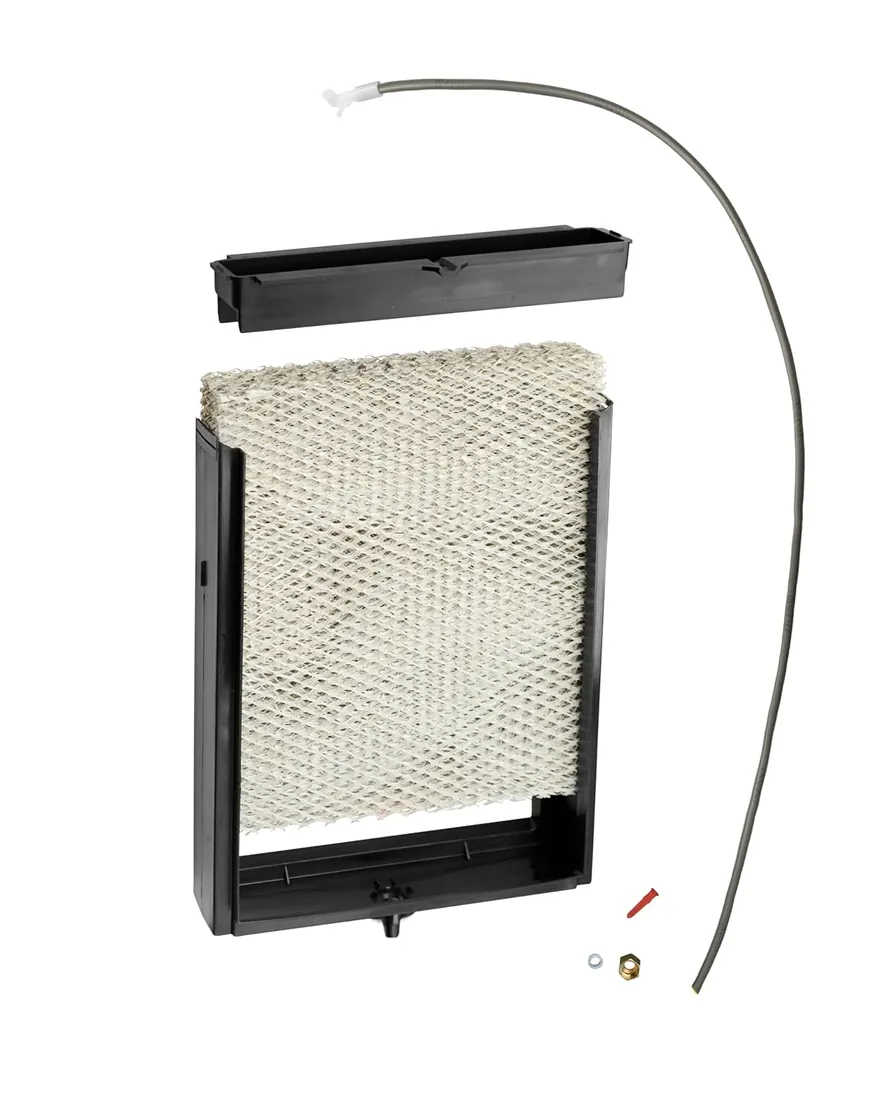
Both types mount on the furnace ductwork. Water trickles down an evaporator pad (a water panel), warm air passes through it, and the moist air goes out to the house. A humidistat turns the water on when the house drops below its setting.
Bypass humidifiers
A bypass unit uses the pressure difference between the supply and return ducts: a short bypass duct carries warm air from one side, through the pad, and back. It has no motor of its own, so it is quiet and cheap to run, but it only works while the furnace blower runs and it needs space for the bypass duct.
- Lower cost and fewer parts
- Needs a bypass duct and room to mount it
- Output depends on the furnace running
Fan-powered humidifiers
A fan-powered unit has its own fan that pulls air from the supply duct through the pad. It puts out more moisture in the same time, needs no bypass duct, and suits larger or leakier homes and tight mechanical rooms.
- Higher output
- No bypass duct
- Small electrical draw and a fan to maintain
Choosing and maintaining
| Bypass | Fan-powered | |
|---|---|---|
| Air movement | Furnace blower and duct pressure | Its own fan |
| Bypass duct | Required | Not needed |
| Output | Lower | Higher |
| Running cost | Water only | Water plus a little electricity |
Either way, replace the water panel at least once a heating season; minerals stiffen it and cut output. Set the humidistat lower in very cold weather to avoid condensation on windows.