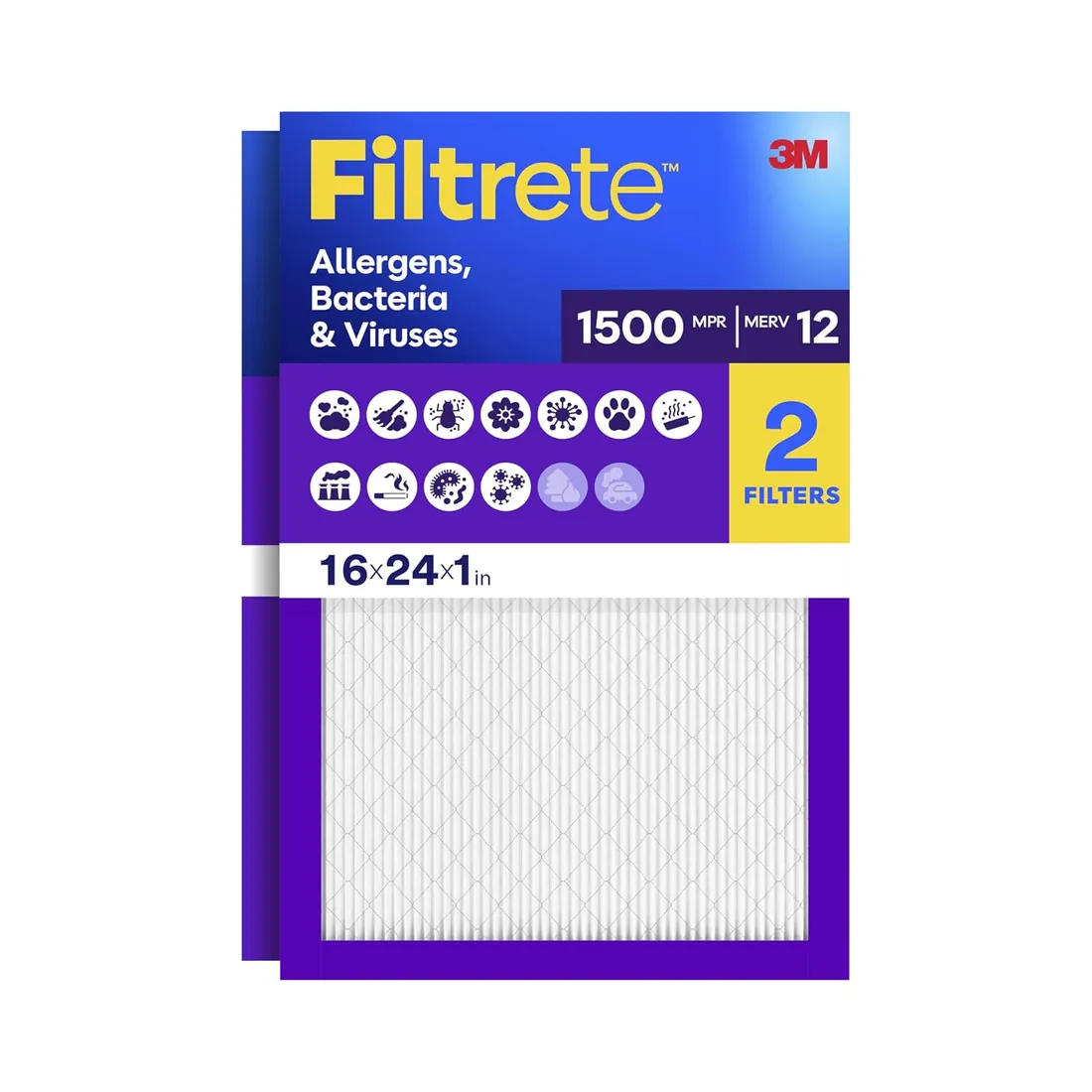
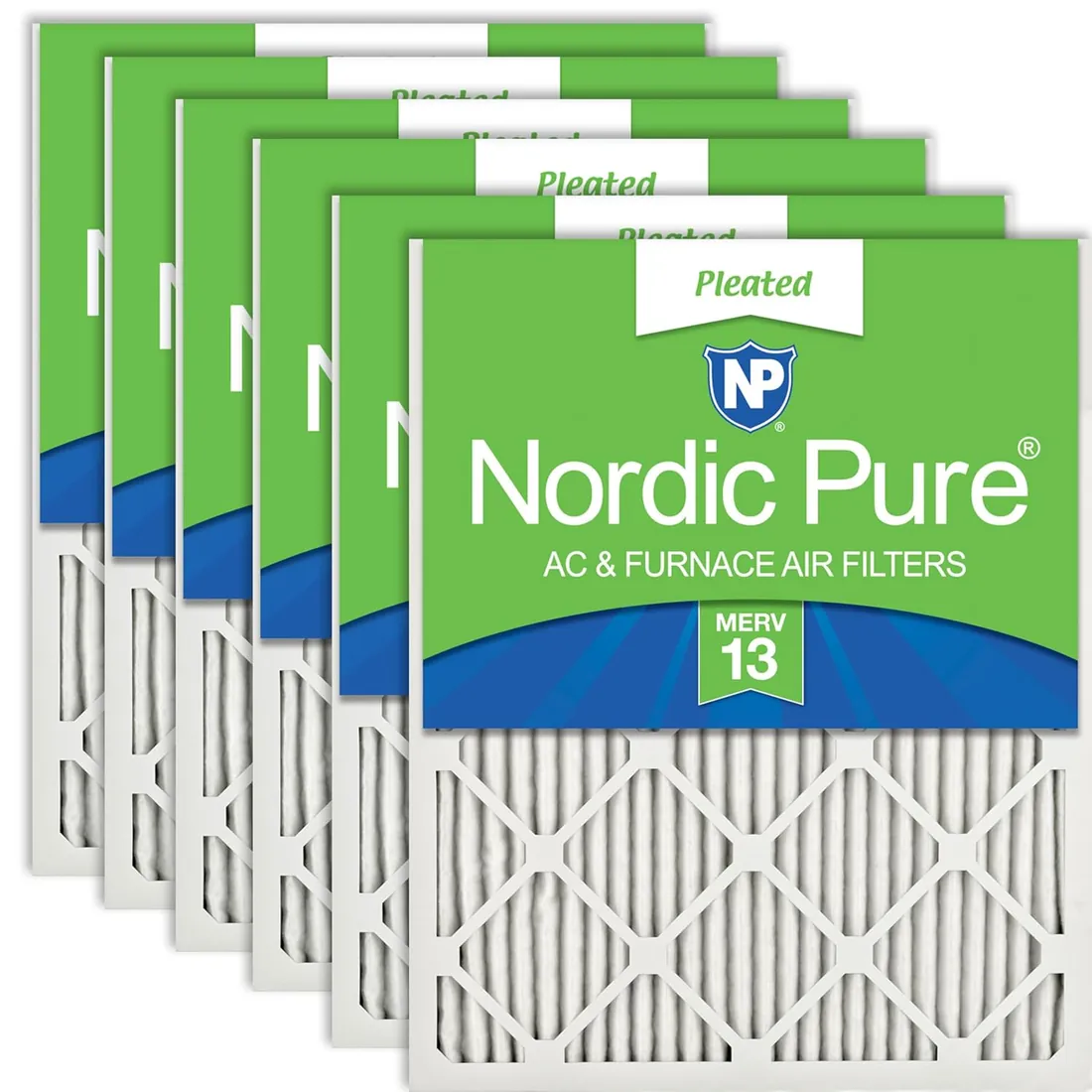
MERV 14 to 16 filters are made for hospitals and commercial systems with larger fans and deep filter racks. In most homes they restrict airflow too much in a 1-inch slot. If you want better than MERV 13, use a 4- or 5-inch media cabinet or a HEPA room purifier instead.
What MERV 14 to 16 means
Under ASHRAE Standard 52.2, MERV 14 to 16 filters catch most particles even in the 0.3 to 1 micron range. They are standard in hospitals, labs and many commercial buildings, where air handlers are designed for the pressure drop of dense, deep filters.
Why homes struggle with them
A typical residential blower is designed for a modest total static pressure across the whole system. Dense filters add resistance, especially in thin 1-inch frames with little surface area. Too much resistance reduces airflow, which can cut heating and cooling capacity, freeze an AC coil or make a furnace overheat and cycle on its limit switch.
- Thin 1-inch MERV 14+ filters are rare and restrictive
- Older PSC blower motors lose airflow quickly as resistance rises
- Variable-speed ECM blowers hold airflow better but use more power to do it
Better ways to get high efficiency
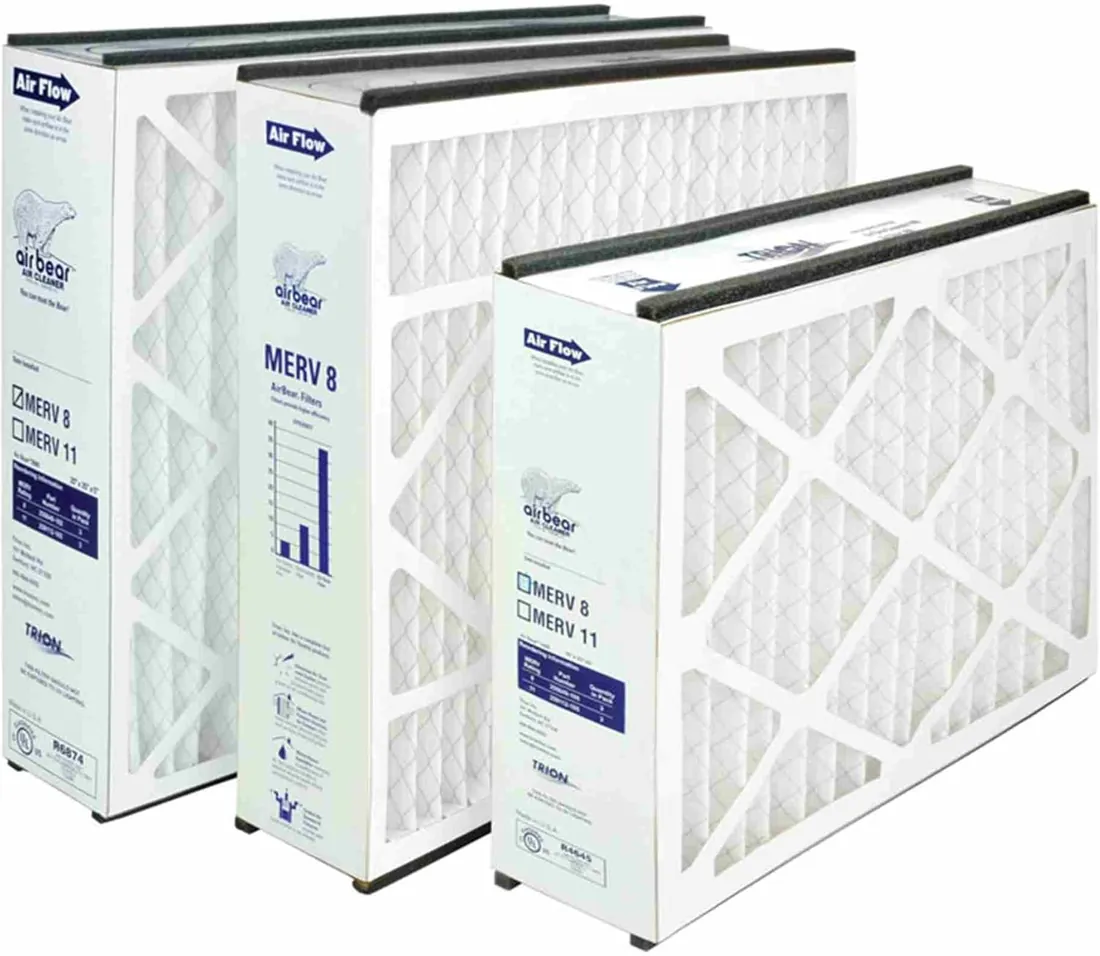
- A 4- or 5-inch media cabinet at MERV 13: far more pleated area, so low resistance at a high grade.
- A HEPA purifier in bedrooms and living areas for the finest particles.
- Have a technician measure static pressure before and after a filter upgrade.
If you do try a higher grade, watch for warning signs: whistling at the return, a filter bowing inward, rooms that heat or cool more slowly, or an AC line that ices up.