The short answer
Cool mist is the safer choice for homes with children and pets and costs less to run; warm mist boils the water, so it puts out cleaner vapor and feels cozy, but the hot reservoir is a burn risk and it uses more electricity.
How each type works
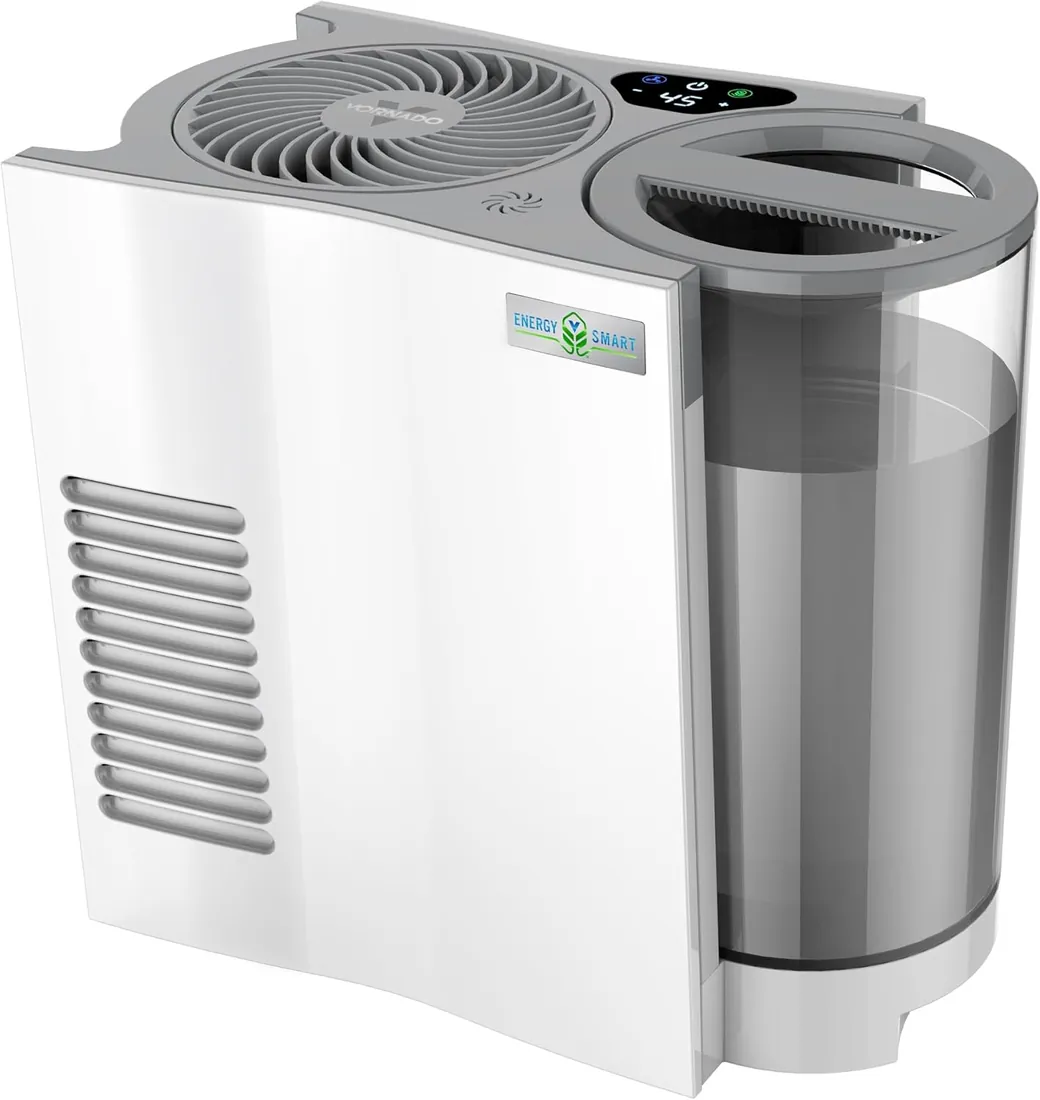
- Evaporative (cool): a fan blows air through a wet wick. It can't over-humidify and leaves no white dust, but the wick needs replacing.
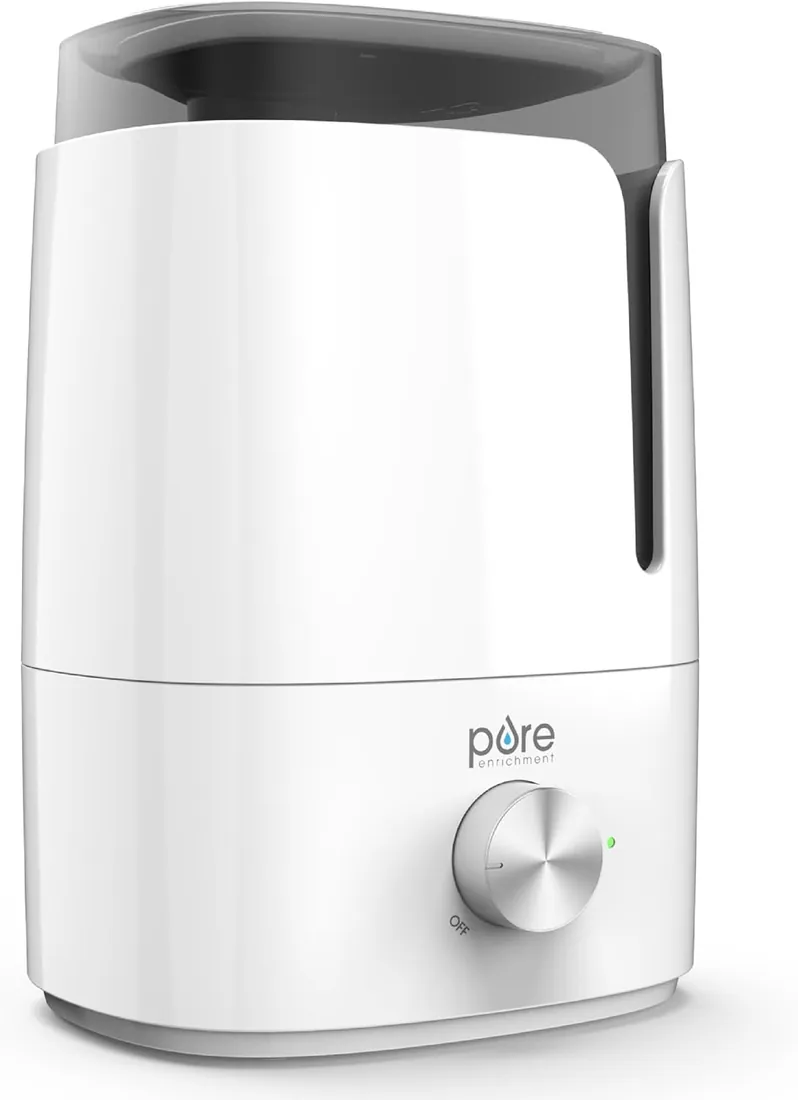
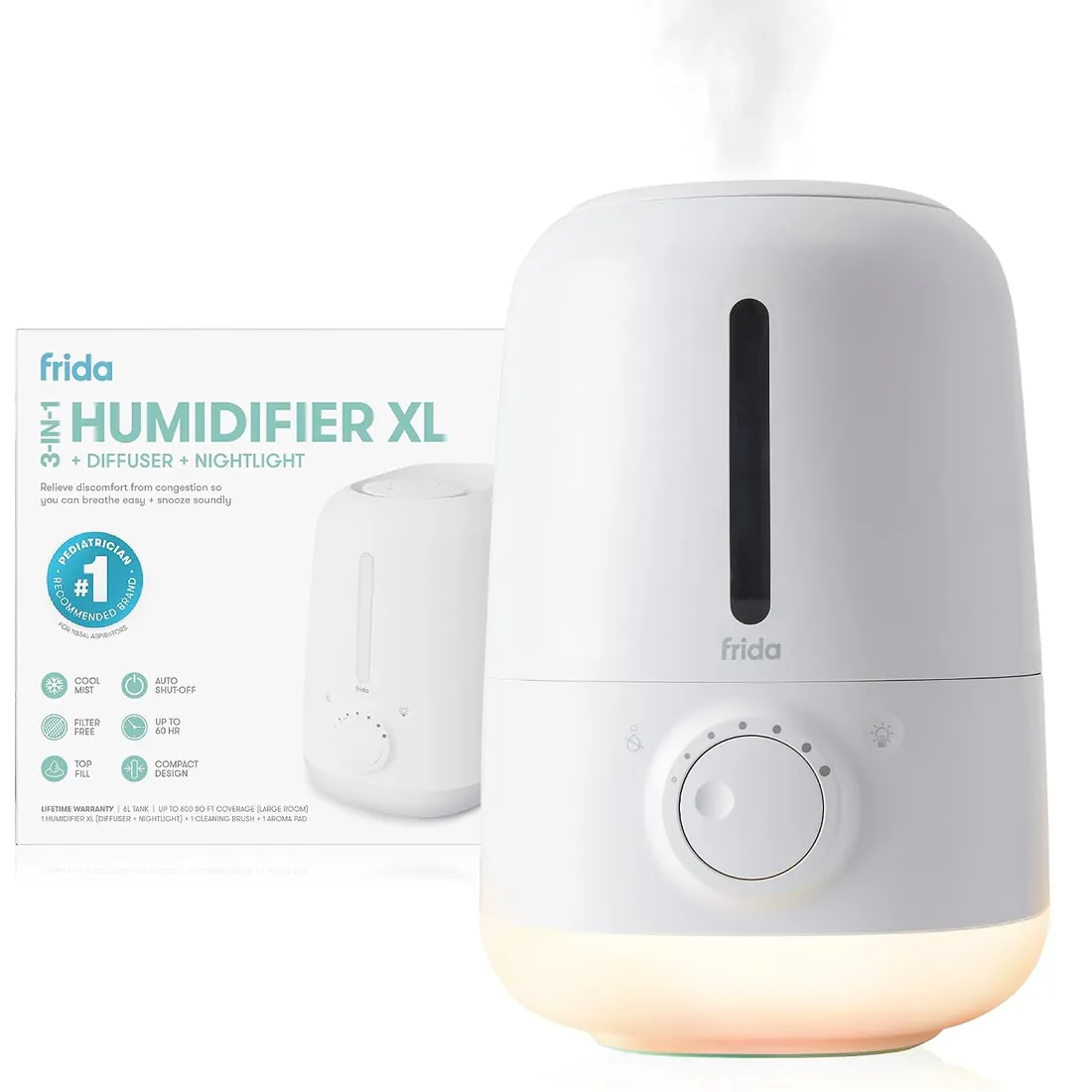
- Ultrasonic (cool): a vibrating plate makes a fine mist. Very quiet and efficient, but minerals in tap water come out as white dust.
- Warm mist / steam: a heater boils water. The vapor is free of minerals and microbes, but the unit draws much more power and the water is hot.
Once the moisture reaches the air, it's the same water vapor; warm mist doesn't make a room noticeably warmer.
Side by side
| Cool mist | Warm mist | |
|---|---|---|
| Burn risk | None | Hot water and steam |
| Running cost | Low (a fan or transducer) | Higher (a heater) |
| Noise | Ultrasonic near-silent; evaporative has a fan | Quiet, some bubbling |
| Hard water | Ultrasonic leaves white dust; evaporative scales the wick | Minerals stay in the tank |
| Germs | Needs regular cleaning | Boiling kills most microbes |
Which to choose
- Children's rooms and nurseries: cool mist, placed out of reach.
- Hard water and no wish to buy distilled water: evaporative.
- Quietest bedroom unit: ultrasonic with distilled or demineralized water.
- Cold rooms where a warm feel matters and no small children: warm mist.
SafetyPediatric guidance generally recommends cool-mist humidifiers for children's rooms because hot water and steam can cause burns.
Products mentioned
Questions readers ask
Is cool mist or warm mist better for a cold?
Both add the same moisture; cool mist is generally recommended around children because of burn risk.
Does a warm mist humidifier heat the room?
Not noticeably; the vapor cools as it mixes with room air.