Fix water first (grading, gutters, a vapor barrier). Then use a dehumidifier made for crawl spaces: low-temperature operation, a built-in pump or gravity drain, and ducting options, sized to the space's square footage.
Why crawl spaces get damp
Bare soil gives off moisture, vents let in humid summer air that condenses on cool surfaces, and plumbing leaks go unnoticed. Air from the crawl space rises into the living space, carrying moisture and musty smells with it.
Before buying a dehumidifier
- Keep rainwater away: gutters, downspout extensions and soil sloped away from the foundation.
- Cover exposed soil with a heavy vapor barrier.
- Consider encapsulation (sealed vents and walls); a dehumidifier works far better in a sealed space.
Crawl space units
Crawl space dehumidifiers are compact, often rectangular, built to run in temperatures in the 30s to 40s°F, and drain continuously through a hose or pump. Portable home units lose capacity and can frost in cool spaces.
Products mentioned
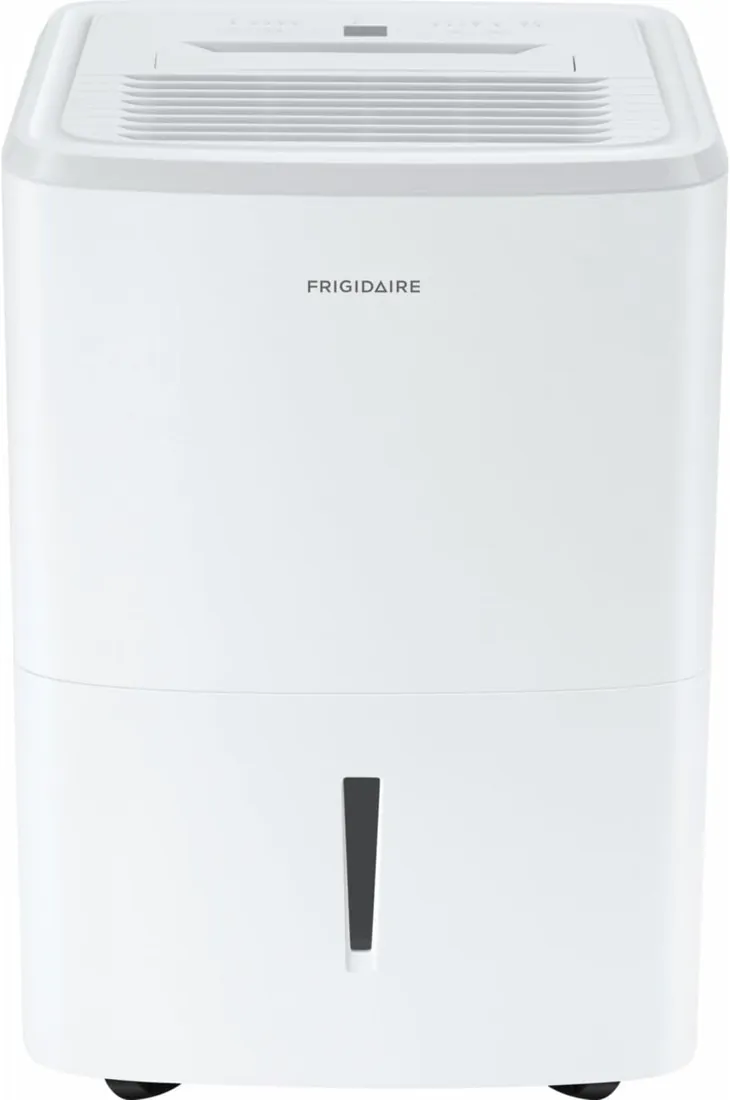
Frigidaire FHDD5034Y1 Dehumidifier
50 pints per day · 2.7 gallons · 4500 square feet
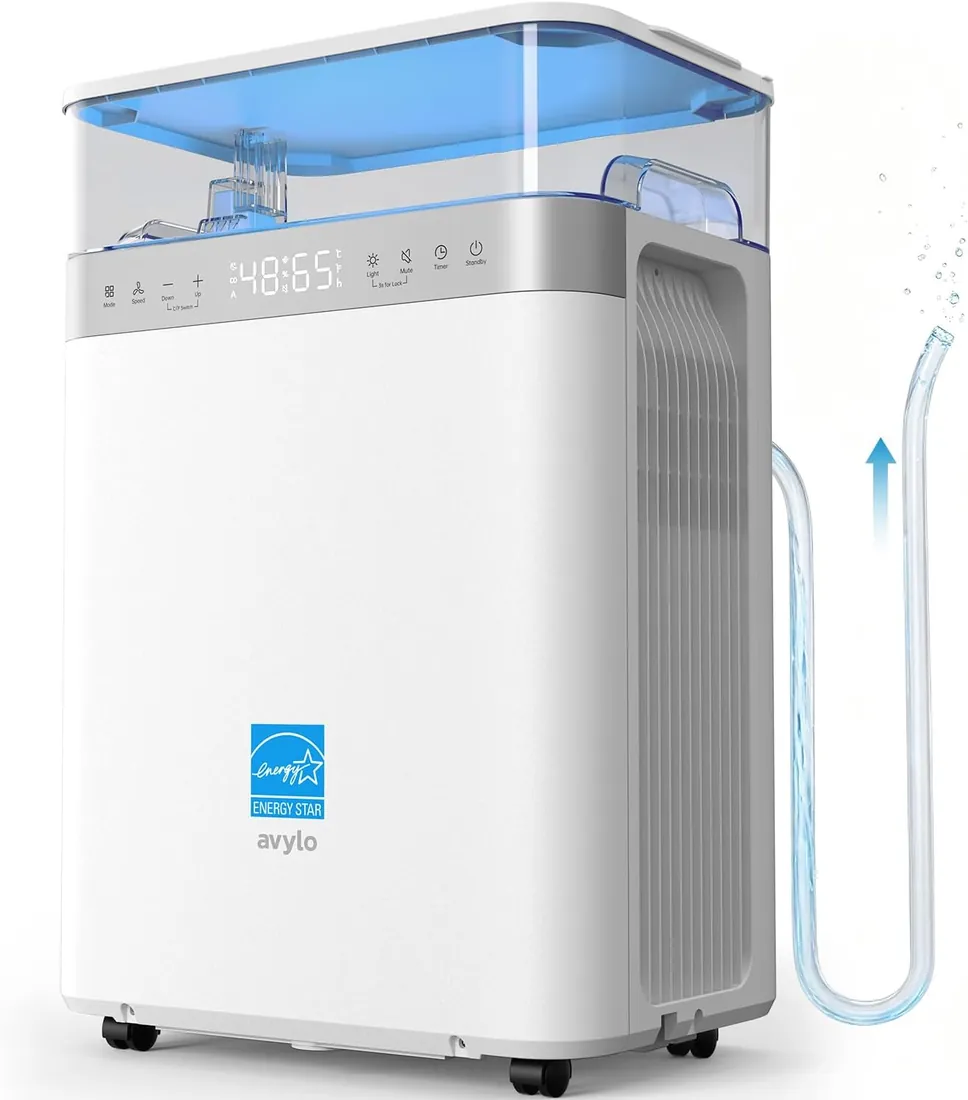
avylo Max 90 Dehumidifier
90 pints per day · 2.11 gallons · 4500 square feet
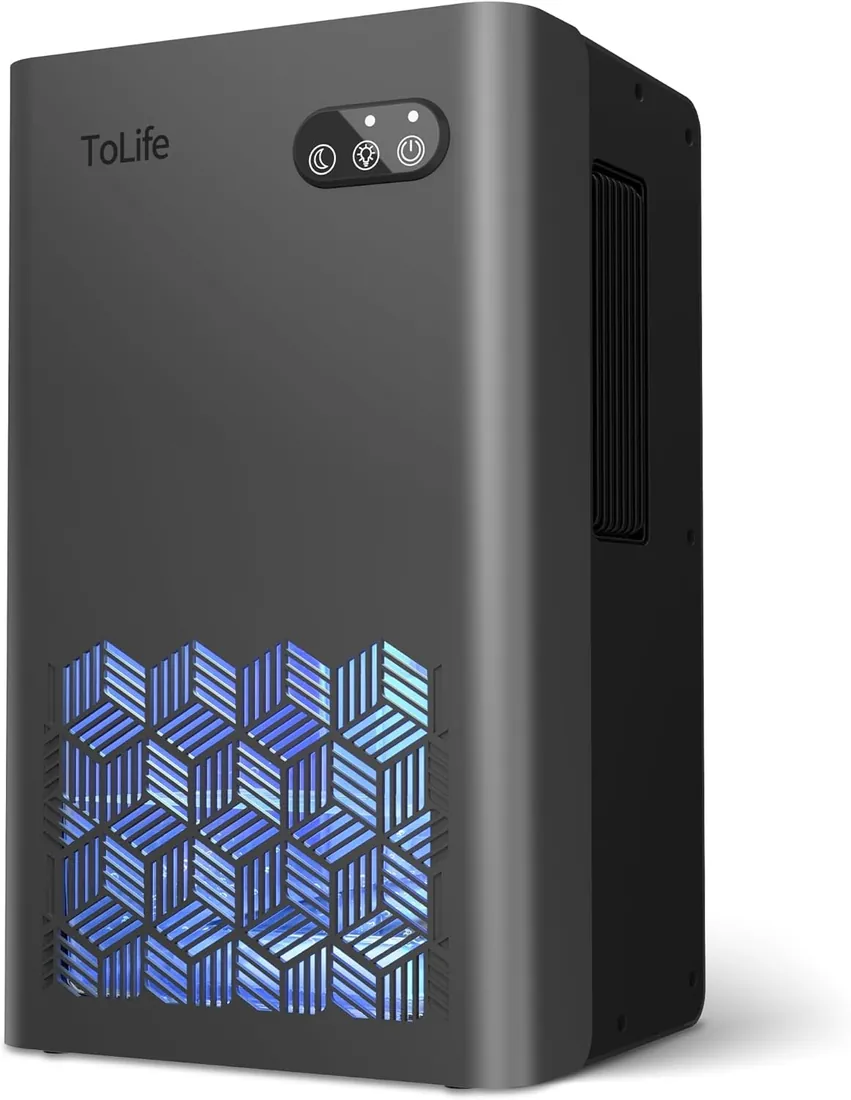
ToLife TZ-C2 Dehumidifier
1 liters per day · 95 fluid ounces · 1000 square feet