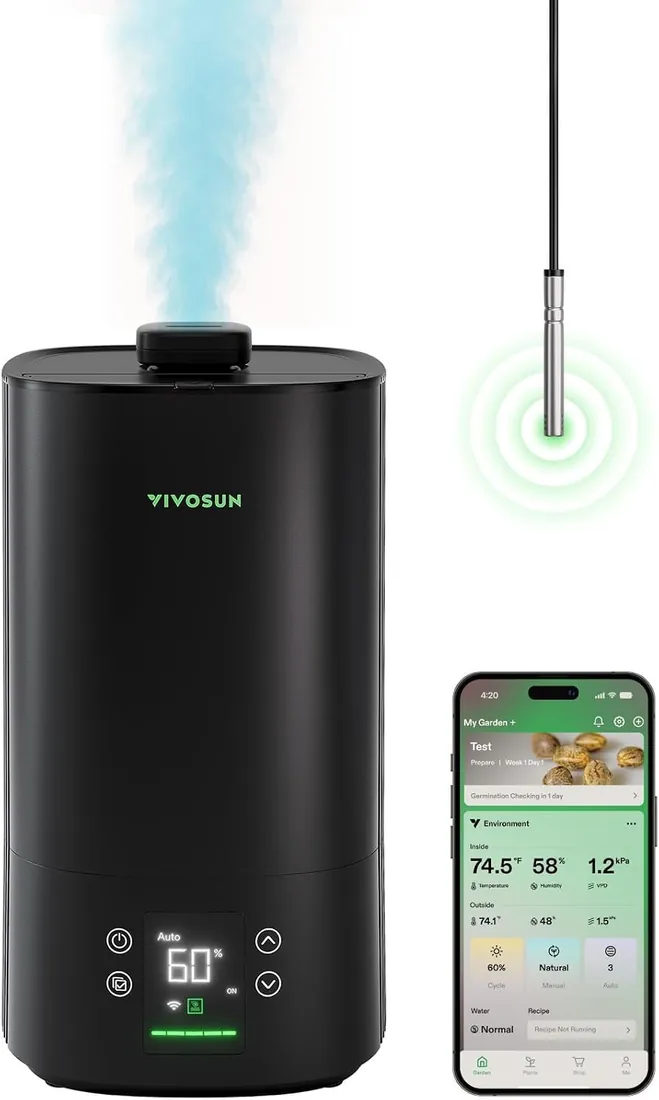
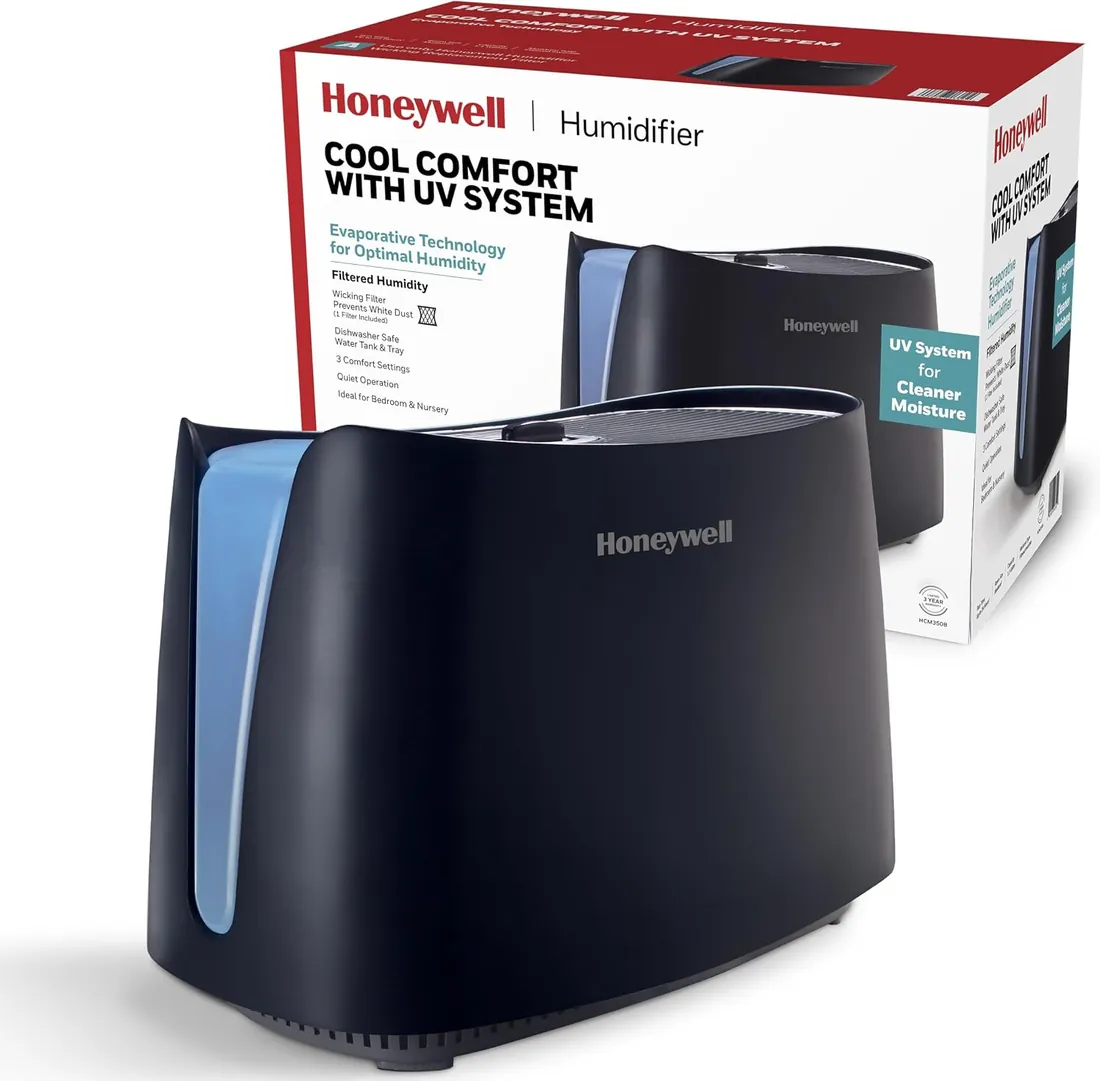
Choose evaporative if you have hard water or want a unit that can't over-humidify; choose ultrasonic if silence matters most and you'll use distilled or demineralized water.
White dust
Ultrasonic humidifiers shake water into droplets, minerals included. When the droplets dry, the minerals settle as fine white dust on furniture and electronics, and can be breathed in. Distilled water or a demineralization cartridge prevents it.
Evaporative humidifiers only release water vapor; the minerals stay behind in the wick, which is why wicks stiffen and need replacing.
Self-limiting output
Evaporation slows as the air gets more humid, so an evaporative humidifier naturally levels off. An ultrasonic unit keeps making mist at its set rate and relies on its humidistat; without one it can push a small room past 60 percent.
Running costs
| Evaporative | Ultrasonic | |
|---|---|---|
| Recurring cost | Wicks every 1-3 months | Distilled water or cartridges |
| Noise | Fan noise | Near silent |
| Over-humidifying | Self-limiting | Depends on the humidistat |
| Cleaning | Tank and tray weekly | Tank and transducer weekly |