The short answer
MERV 8 for equipment protection and everyday dust; MERV 11 for allergies and pets; MERV 13 for smoke, asthma and the most fine-particle capture, ideally in a 4- or 5-inch frame or a system that handles the extra resistance.
What each grade catches
| Grade | Catches well | Typical use |
|---|---|---|
| MERV 8 | Dust, lint, pollen, most pet hair (3-10 microns) | Equipment protection, everyday homes |
| MERV 11 | Plus most pet dander, mold spores, some 1-3 micron particles | Allergies, pets |
| MERV 13 | Plus a good share of 0.3-1 micron particles, much wildfire smoke | Smoke, asthma, high-allergy homes |
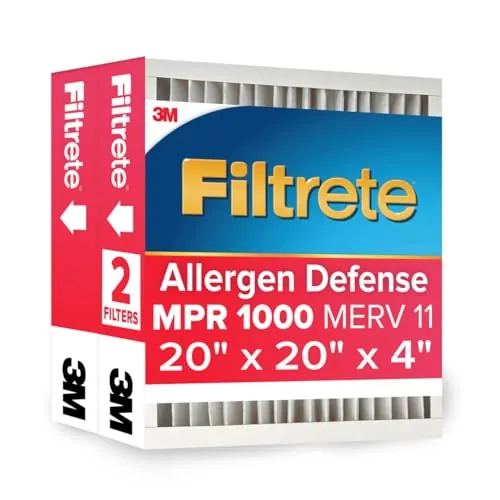
Filtrete's MPR scale maps roughly to MERV: MPR 600 ≈ MERV 8, MPR 1000 ≈ MERV 11, MPR 1500 ≈ MERV 12, MPR 1900 ≈ MERV 13.
The airflow trade-off
Denser media resists airflow more. In a deep 4- or 5-inch filter, the extra pleat area keeps resistance low even at MERV 13. In a 1-inch filter, MERV 13 adds noticeable resistance; most modern systems handle it, but older blowers and undersized returns may not.
- Signs a grade is too dense: whistling at the return, a filter that bows, weak airflow from vents, an AC coil that ices.
Which to choose
- No allergies, older system: MERV 8.
- Pets or seasonal allergies: MERV 11.
- Smoke, asthma or wildfire season, with a 4- or 5-inch slot or a system known to handle it: MERV 13.
Products mentioned
Questions readers ask
Is MERV 13 bad for my furnace?
Not for most modern systems; in a 1-inch slot on an older or undersized system it can restrict airflow. Watch for whistling or a bowing filter.
Is MERV 11 worth it over MERV 8?
If anyone in the home has allergies or you have pets, usually yes.